

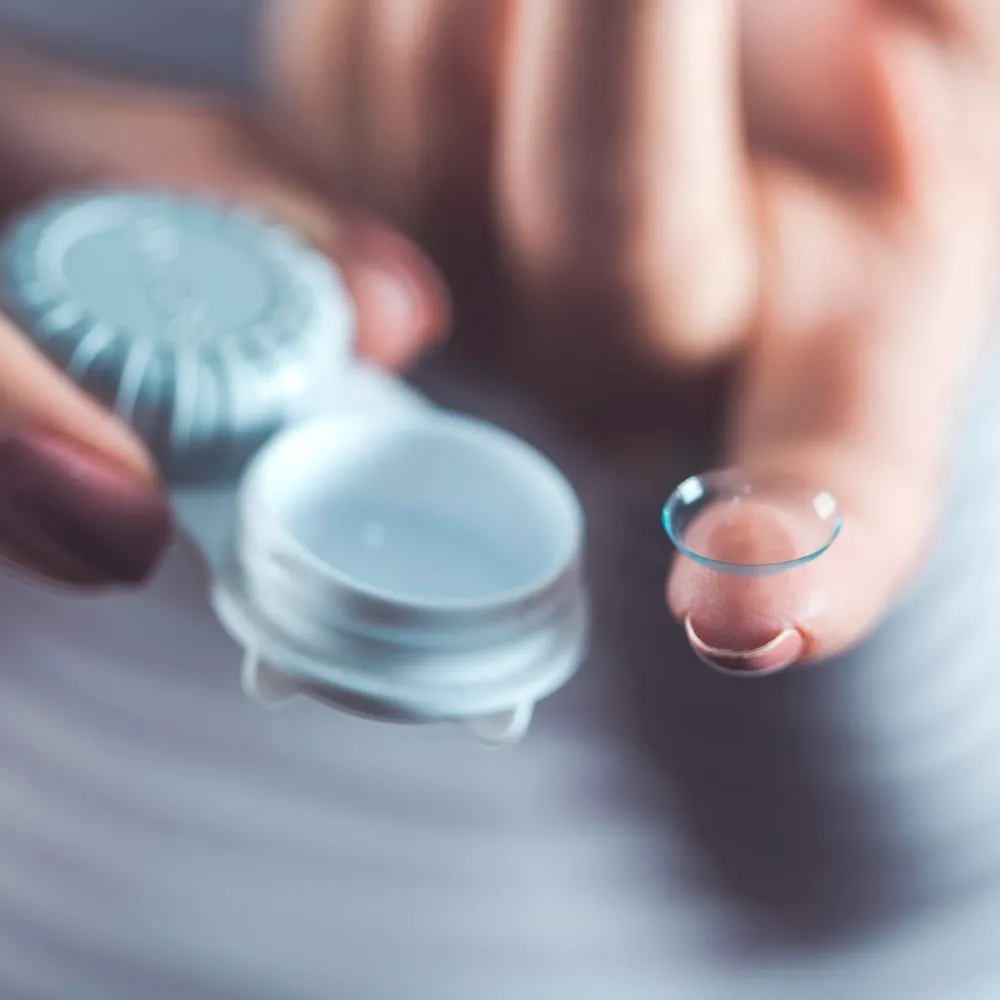
Eyewear: Contact Lenses
The first usable contact lenses were made in the 19th century out of glass that covered the whole eye. Contact lenses have gone through many changes in process and material since then to become the comfortable, long-wearing, and popular vision correction option available today. Contact lenses have also been developed for therapeutic uses in the treatment of some eye conditions.
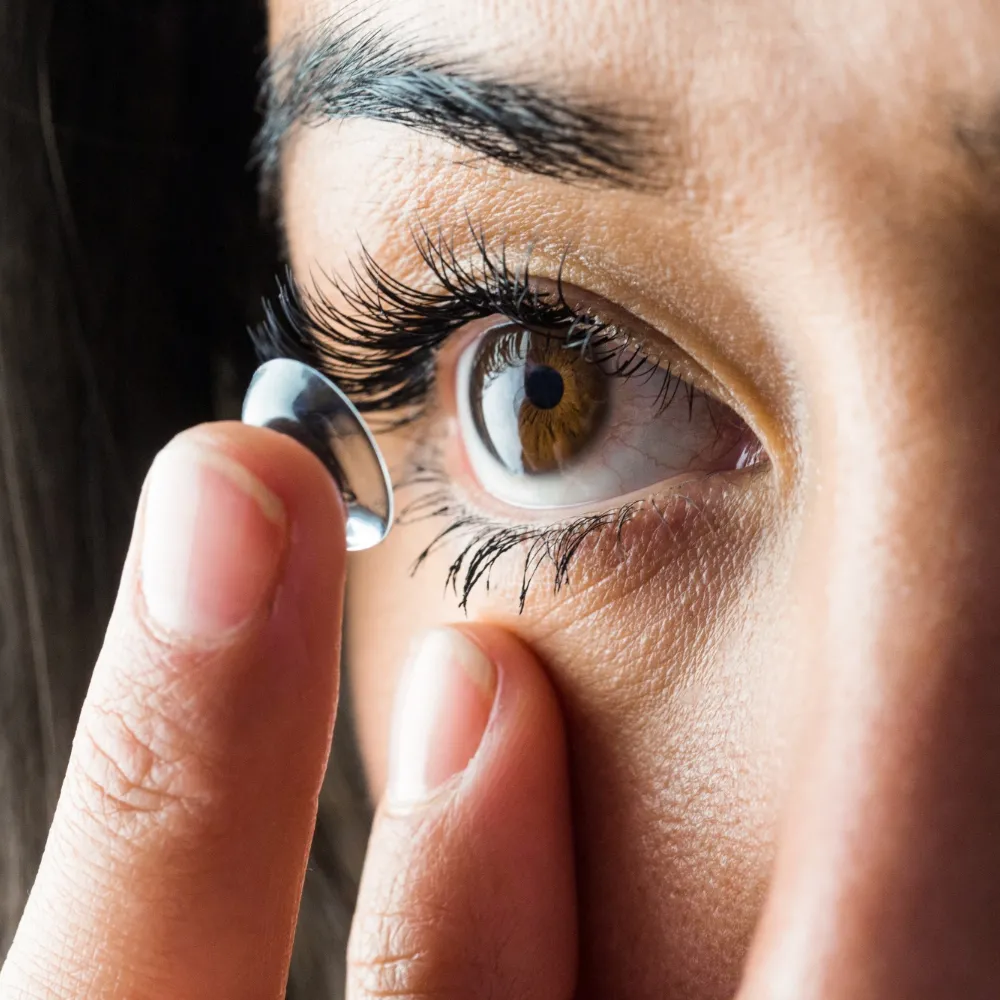
Why Contact Lens Fitting Is Essential
Contact lenses are medical devices. They require a special prescription which is different from an eyeglass prescription, and they must be fitted by a licenced eye care professional. Every eye is different, even your own two eyes. The unique characteristics of your eyes need to be accommodated with precision. Poorly fitting contacts can result in irritation, infections, corneal scratches, and sometimes even blindness.
There are a few steps involved in proper contact lens fitting:
- During your eye exam, your overall eye health will be evaluated to ensure your eyes are suitable for wearing contacts. If you require vision correction, a prescription will be issued for the eyeglass lens correction you need. This value wil be converted into your contact lens correction.
- A keratometer will be used to determine the curvature of your eye, which will determine the curvature and size of your contact lenses.
- The health of your cornea and the dryness of your eyes will be assessed to determine the best contact lens composition and solution. This requires a test to evaluate the tear film of your eyes. Allergies and lifestyle will also be considered.
- You will need to use a trial pair of contact lenses for a period of time. At a follow-up appointment, your optometrist will determine if your contacts are providing optimal comfort and clarity, while maintaining healthy eyes. If they are, a final contact lens prescription will be provided.
It's important to understand that every contact lens product is unique and designed for a particular purpose. This includes everything from material, curvature, fit, oxygen permeability, deposit resistance, moisture content, and lifespan. It is never recommended to switch the brand of lenses you are using without consulting a licenced eye care professional.